
Jingxuan Yang
Oxford PhD Physicist working on
Exoplanet Atmospheres | Space Telescope Observations | Bayesian Inference | Python Programming
Recent Projects
NEMESISPY: A Python Package for Exoplanets
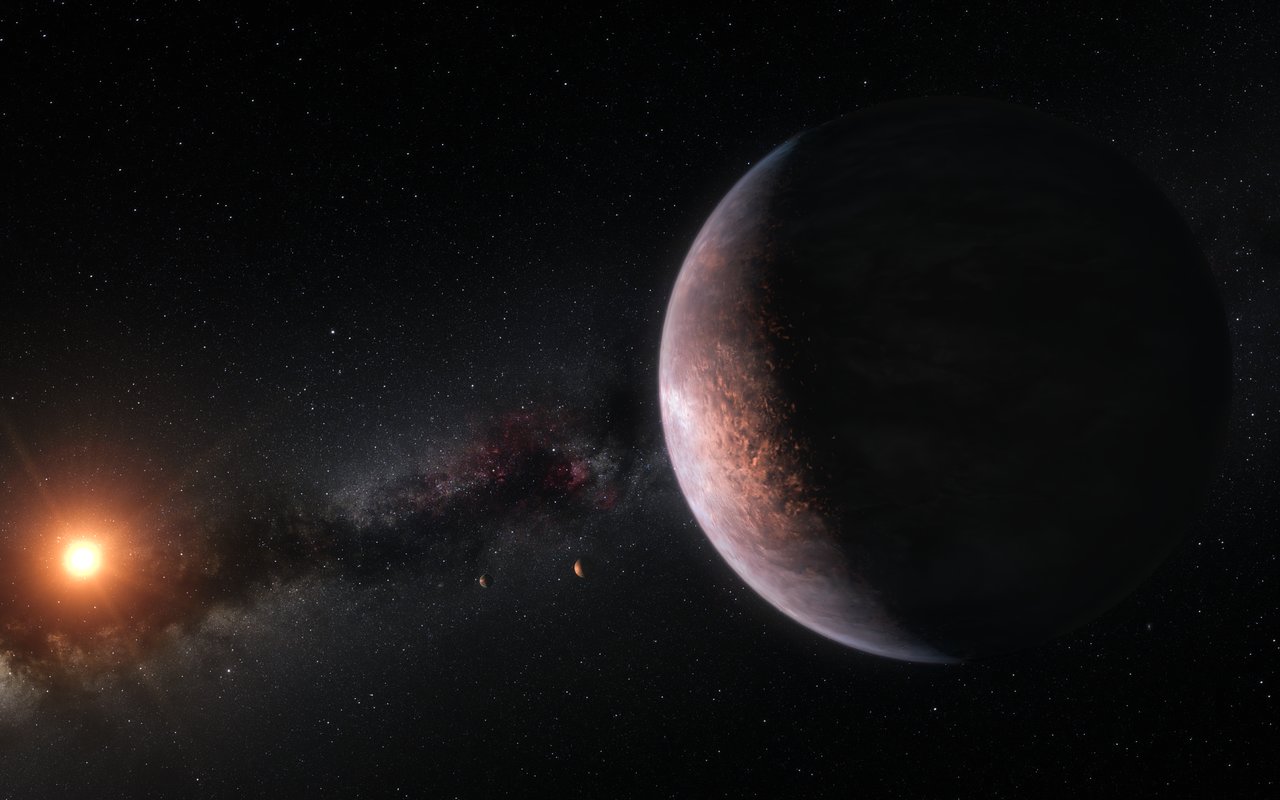
NEMESISPY is an open-source software I developed during my PhD. It performs atmospheric retrievals on telescope observations of exoplanets, which can help us understand what they are made of. NEMESISPY has been used to estimate the abundance of H2O, NH3, and CO on the hot Jupiter WASP-43b, infer the presence of a secondary atmosphere and possible sulphur species on the super-Earth L98-59d, and constrain the atmospheric metallicity of the ultra-hot Jupiter KELT-7b. It is listed on the NASA Exoplanet Modeling and Analysis Center.
Characterising the hot Jupiter WASP-43b
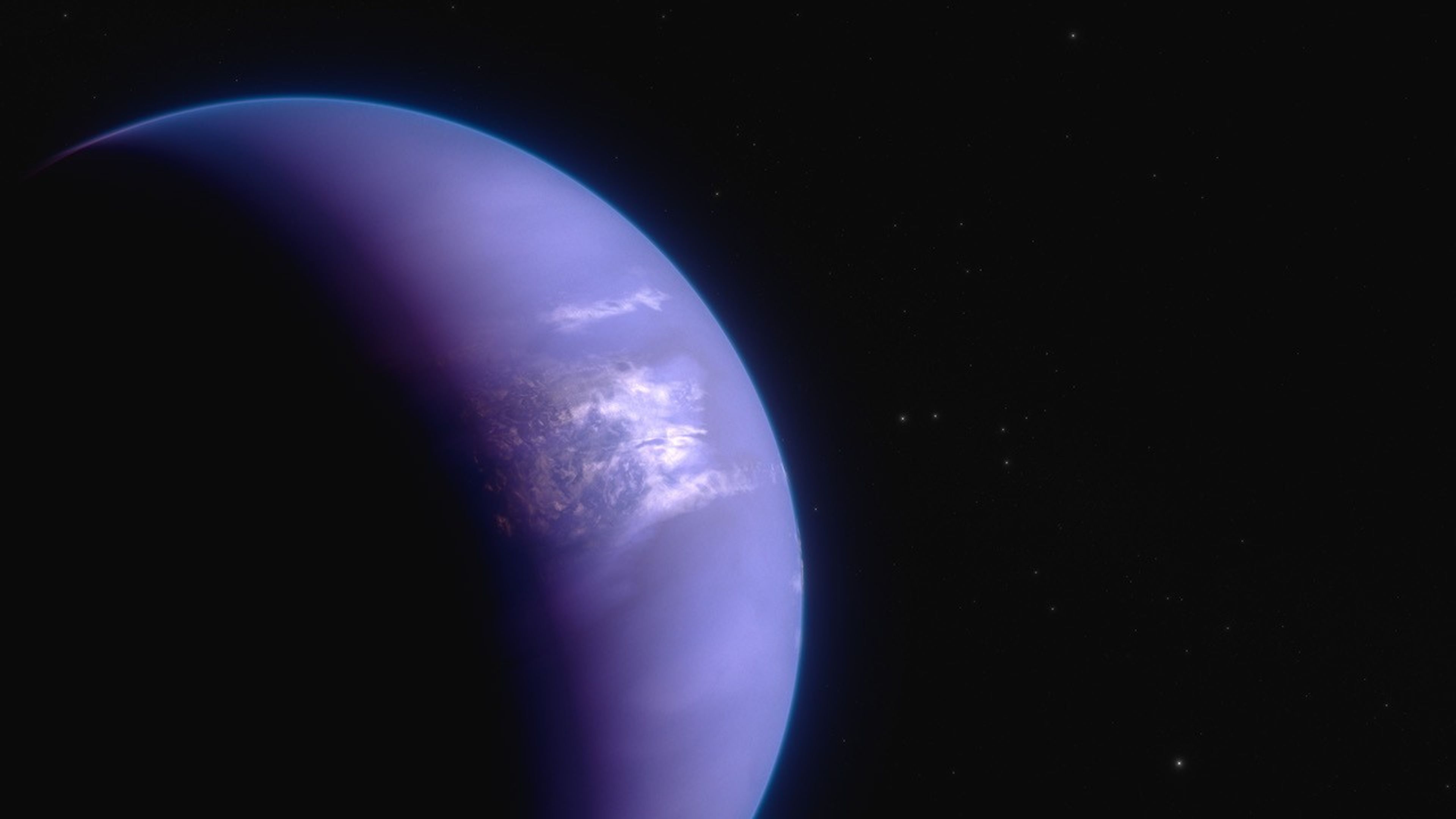
WASP-43b is a Jupiter-sized exoplanet orbiting a star roughly 280 light-years away. The planet completes an entire orbit in about 19.5 hours, which is a mere fraction of the 88-day orbit of Mercury. How such objects form in the first place is an enticing puzzle. With the help of powerful space telescopes such as the Hubble Space Telescope and the James Webb Space Telescope, I constrained the composition of this planet using atmospheric retrievals, which revealed a high-metallicity, high carbon-to-oxygen ratio atmosphere. Consequently, WASP-43b likely formed in a metal-rich environment with enhanced carbon content, possibly due to the inward drift of CO pebbles in the proto-planetary disc.
Research
As an observational astrophysicist, I analyse space telescope observations of exoplanets, which are planets outside our solar system. In particular, I study the atmospheric composition of Jupiter-sized planets orbiting close to their stars (known as "hot Jupiters") by fitting models to their emission spectra. By precisely constraining the properties of hot Jupiter atmospheres, we can understand how atmospheric physics work under extreme conditions, as well as understand what hot Jupiters are made of, which may one day help us decipher how they formed in the first place.
Software

I am the principal developer of the NEMESISPY software, which is an open-source Python package designed to perform analysis on the spectra of exoplanets. The code can be found on GitHub.
About Me
I obtained a doctoral degree in Physics from the University of Oxford working on the atmospheres of exoplanets. During my PhD, I built atmospheric models and spectral simulation software to analyse state-of-the-art space telescope observations of hot Jupiters. Previously, I graduated from the University of Cambridge with a degree in Natural Sciences and completed a Masters in Planetary Science at University College London.
Teaching
Teaching is something I truly enjoy. I have worked with learners from diverse age groups, from primary school children to postgraduates. While completing my doctoral degree at the University of Oxford, I worked as a tutor for the Department of Physics and the Department of Materials. In the Oxford system, a tutor is responsible for marking the coursework of students and giving weekly or biweekly small-group classes known as tutorials to discuss their solutions. I tutored the following courses: Mathematical Methods, Fluids, Physics of Atmosphere & Oceans, Probability and Statistics, and Mathematics for Materials Science. I also worked as a lab demonstrator in the Atmospheric Physics Lab, supervising undergraduate students in physics practicals.
Contact

University of Oxford
Department of Physics
Clarendon Laboratory
Oxford
OX1 3PU